What is a prepper pantry?
In a home, there is an area stocked with food staples like canned foods and dried foods such as oats, flour, freeze-dried strawberries, and many more.
This area stacked with food staples is known as a prepper pantry. On most occasions, the food stocked in the prepper pantries is basic supplies and primary for emergencies.
The purpose of the food staples stocked in the prepper pantry is to feed a person or family for extended durations without needing to go to a store in case of something unknown happens.
Prepper pantries are essential since it helps you feel more prepared for the unknown once you have stocked them with a well-stocked food supply.
There are some events that are unforeseen and they can be sudden. Some of the unforeseen events that may take place can be an unprecedented pandemic that may disrupt the food chain supplies in your local grocery.
Additionally, you may stock your prepper pantry with food staples when you are concerned about a zombie apocalypse.
When unforeseen events happen, a crisis may develop. The crisis can be large or small and it can be resourceful for you to have extra food, water, toilet paper, and other primary necessities on hand.
Establishing a prepper pantry in your home is relatively simple. However, ensuring there are always enough supplies in your prepper pantry to meet your family’s needs requires a bit of planning and routine management.

Prepper pantries are available in two distinct types, however, to suit your personal preferences and your space, you might need to combine them both.
Working Pantry
The least affordable and easiest to establish is a working pantry since it is the bare minimum. Depending on the size, the working pantry’s intended purpose is to provide basic supplies that can last you and your family for a month or two.
Despite working pantries being small, they are a bit larger compared to the average kitchen pantry. Items that you regularly use as you prepare for your daily meals and then replace them while you go grocery shopping are the ones found in a working pantry.
To ensure that all the food in your working pantry is used before they go bad it is important to rotate them on a basis of first in, first out. You may even have a working pantry without even knowing it if you farm or garden in your home regularly.
Long-term emergency food-storage pantries
The other types of prepper pantry are the long-term emergency food storage pantries. These types of pantries are quite extensive since they are designed to hold food and supplies that are enough to sustain your family for long duration than three months.
The items in these types of pantries can last for several months or even years. Most of the items found in these types of pantries are non-perishable since they should last for extended periods.
Additionally, most of the items found in these types of pantries are always in large quantities. Some of the items that you may find in these types of pantries include MREs (meals ready-to-eat) and bulk items that are sealed.
You are also likely to find 5-gallon buckets of rice, flour, or beans, oversized canned goods which are at times referred to as #10. To fully protect the items in these types of pantries, you need to keep them organized, pet-proofed, and at a controlled temperature.
Why have a prepper pantry?
- When big emergencies occur such as natural disasters, economic collapse, and stay-at-home mandates, that may lead to food hoarding, prepper pantries are highly useful.
- When small crises like sudden illness or a job loss that cut into your budget happen, pantries do come in handy.
- With a pantry in your home, you will have extra food available till whatever crisis or emergency passes. This makes you prepared and gives you peace of mind.
Size & Location Matter
The location where you are going to establish your prepper pantry is important once you have decided to start one of your own. Location is vital since it helps in pest infestations and spoilage prevention.
You will need a little creativity to establish a pantry if you have limited space in your home while you could be set and good to go if you have a large basement that does not flood.
Spoilage of items in your pantry can be catalyzed by moisture content and high temperatures.
Additionally, you should keep in mind that the nutrients and vitamins in your food can be depleted by direct sunlight.
When it comes to the location of your pantry, it should be a cool and dark place that is free from moisture and pests.
A cool and dark location for your pantry is important since it will help in keeping your food from going bad before its expected date since they will be no moisture or pests to do this.
Proper storage of your food in the pantry will ensure you are not putting your health at risk while also saving money.

A large space is advantageous since it can accommodate shelves making the organization of the pantry much easy. A common roadblock for many would-be preppers is lack of space. But it is still possible since you can convert any unused space in your house that is secure, cool, and dry into a food storage area.
Start small
Beginning with a small stockpile of food and increasing it a little bit at a time is perfectly fine. In most situations, not many people can manage to spend a lot of money on the fly to stock a large food pantry.
Additionally, unless you know there is a major crisis or emergency in the near future, there is usually no need to do this. Taking advantage of sales, coupons, and many more and setting aside a small part of your grocery budget is a great way of stocking your pantry.
It does not take too long to amass a supply of food that will get you through most small crises. For small crises, a two-week to three-week food supply can be enough.
After stocking a food supply that can last you for two to three weeks, you can start compiling a food supply that can last you for longer durations of for example more than 3 months.
A stockpile that can last you and your family for 90 days is always recommended. An easy way to get started on your prepper pantry is by starting to double up on what you would normally buy during sales. This is a great way of beginning to prep your pantry on a budget.
It is advised that you first decide on the number of people you will need to feed and water and make a prepper pantry list of their ages and personal needs before you determine how much to start with.
After that, check on the space availability since this will determine the duration-worth of supplies you will have in your store.
Prepping your pantry
You should choose items that your family will actually eat or you will end up wasting your money and space when beginning to collect food for your pantry.
You can also stock something your family would not normally eat unless it is the only option available. However, you should keep in mind that during stressful situations, familiar foods are always comforting.
Stocking food items that you normally use makes rotating the sock in your pantry much easier and this will also not upset your family further.
Stocking a basic shelf-stable pantry staple that lasts the longest without refrigeration is satisfying and great.
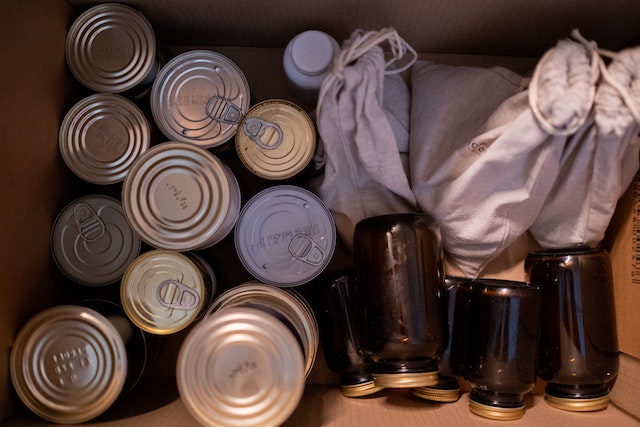
Some of the self-stable pantries that do not require refrigerating include dry nonperishable items like flour, rice, canned goods, and dehydrated products. Since these items won’t go bad quickly and they do not require frequent rotation as perishable goods, they will offer more bang for your buck.

The basics that you will require to build a proper pantry include flour, salt, sugar, pasta, rice, beans, cooking oils, canned meats, soups, chili, fruits, vegetables, tomato/spaghetti source, chicken/beef broth, bouillon cubes, instant potatoes, oatmeal/hot cereals, soup mixes, powdered milk, baking powder/soda and yeast.
Water is the most important that you would want to make space for when building a pantry. You will need to store at least one gallon per person in your family a day. Purchasing water purifying tablets or small filters is also a great option.
Organization is key
Just as important as what you put in, organizing your prepper pantry is also important. With proper organization, you can fit as many as possible items in the available space.
Additionally, there are also multiple storage container options with airtight seals that will help in preventing moisture and bugs from getting inside. Such containers are also available in multiple sizes and they fit in various spaces in your prepper pantry.
You should opt for bags instead of buckets to store dry foods such as beans and grains. This is because buckets take up much space compared to bags.
When dry foods such as beans and grains are stored correctly, they can last for decades. Despite buckets taking much space, they are more affordable compared to bags such as Mylar bags.
Additionally, it is easier to remove partial amounts from buckets and reseal them.
Buying containers that best fit the space in your pantry is also a great way to keep it organized. For example, there are #10 cans or 5-gallon pails that you can stack from floor to the ceiling.
Further, the number of people accessing the pantry should be directly proportional to the size of the container. With this in mind, a #10 can might be perfect for a growing family of six but too big for a grandmother.

You should store supplies that you need more or use frequently such as grains in 5-gallon buckets. For easy stacking, you should also package items in similar-sized containers.
Vacuum-sealed bags are also great to have in your pantry since they help create more space that you may need for storage of other things.
Do not overload them and always put heavier items towards the bottom when using shelving.
Keep It Fresh
FIFO (First In First Out) as used in grocery stores and restaurants is a great way of ensuring that stored foods are properly rotated.
Properly rotating stored food in grocery stores and restaurants is an excellent way of preventing waste while also promoting freshness. You should also use the FIFO means in your prepper pantry.
You will need to create an easy method to keep track of which goods have been in your pantry the longest. The longest stored in your pantry are the ones that were first brought in and they should be used next or first out.
Your prepper pantry list should include items purchased and their expiry dates. This will enable you to start moving items into your working/functioning pantry use them before they expire or go bad and which ones need replacement.
All inventories require a time-consuming setup. Simply accept it and approach it in your preferred way. Keeping a clipboard and pen close to the storage is one way to prevent theft. Each month, updates are made.
You should also check to check the condition of the packaging and storage containers you are using when rotating your stock. You should replace any packaging or storage containers that you find damaged as soon as possible.
Final thoughts
Prepper resources are available in great numbers both online and at your local library.
What Else Do You Need?

Being prepared is the main purpose of having a prepper pantry. Therefore, water and food should be stored along with other essential items. The essential items that should be stored together with food and water are the ones you need and use regularly such as toilet paper.
Setting aside certain necessities in your prepper pantry is a great way of ensuring their exact location when they need to use them arises.
Creating an emergency binder with crucial papers like birth certificates, social security cards, and pictures of family members and pets is advised by several prepper groups.
In addition, include a first-aid kit, supplies for personal hygiene, food and cooking, gasoline, pet supplies, vitamins, and medications.
You should consider storing the following items in your prepper pantry as well:
- Cookware
- Utensils for eating
- Reusable food storage bags and containers
- Trash bags
- Aluminum foil and plastic wrap
- Hand-crank can opener
- Scrub pads/wash clothes
- All-purpose cleaners
- Hand soap/sanitizer
- Diapers/pull-ups for babies/toddlers
- Baby wipes and other essentials
- Pet foods, treats, medications, and many more
- Deodorant, razors, shampoo, toothpaste/brushes, and other personal hygiene items
- OTC drugs like pain killers, allergy pills, cough syrup/drops, heartburn medicine, and many more
- Alcohol wipes, bandages, and other first aid supplies
- Candles, lanterns, flashlights, batteries, and many more
- Battery/solar-powered radio
- Money
10 easy tips on how to stockpile food on a budget
1. Decide on your stockpiling budget

When your grocery budget is limited, you cannot just spend $100 on certain essentials for your grocery shop. Remember that you are assembling a stockpile of goods purchased at the lowest cost, thus the emphasis should be on CHEAP food to stock up on rather than just any old food hoard.
2. Check on new storage space ahead of time
Storing food does not need to be confined to your kitchen. You can branch out and find somewhere that does if you do not have space in your kitchen or pantry.
Some of the places you can branch out include shelves in your garage, under your bed, and above your wardrobe. You should remember that both conventional and unconventional storage spaces work the same with just where your stores are to remember.
3. How much food should you stockpile?
You need to consider how big you need it to be before you begin building your stockpile. Your plans may be limited by your storage space.
Do you come from a big family?
Are you situated in a remote area?
Do you keep food on hand in case the world ends tomorrow?
How much food should you, therefore, save away? Make sure you only store food that you plan to consume in a fair amount of time.
4. Create a food stockpile list
Doing this will give you the opportunity to what you need to buy in your pantry over the following weeks or months.
You can create a stockpile list by spending some time in your prepper pantry and concentrating on long-life non-perishable foods, and budget-stable foods like dried and canned goods.
5. Build Your Supply Over Time
The best way to ensure that you get the absolute best, lowest price and save money on your future grocery bills is by taking your time to build up your grocery stockpile.
6. Invest Time to Find the Best Deals
Investing your time in finding the best deals available to you is the best way you can use to get your food pantry stockpile at the best possible price.
You can find the best deals on any local flyers or newspapers delivered to you or check online for affordable food to stock.
7. Be Open to Shopping Around
You should visit all the grocery stores in your area to get the best and most affordable prices on the items that you want to store. Visiting one store all the time will not give you the opportunity for this.

8. Don’t Overbuy
If you get good at finding great bargains while starting a food stockpile and building it up can be very addictive. Therefore, you should bargain and buy if you do use the item the way you planned.
9. Know Your Prices
Knowing the cheapest prices for specific food items is essential for success when learning how to store food on a tight budget. Identify the very best pricing for each item and keep track of when it is reached.
You’re more likely to stock up on a few goods every two to four weeks when they reach their lowest price point than to buy at regular pricing every week.
When that happens, you should buy enough to last your family through until the next time they go on sale.
10. No Deal, No Buy
If you have money to spend, do not actively look for ‘other’ bargains. You should let it build up while keeping it in your purse.